

Institutionel opsummering
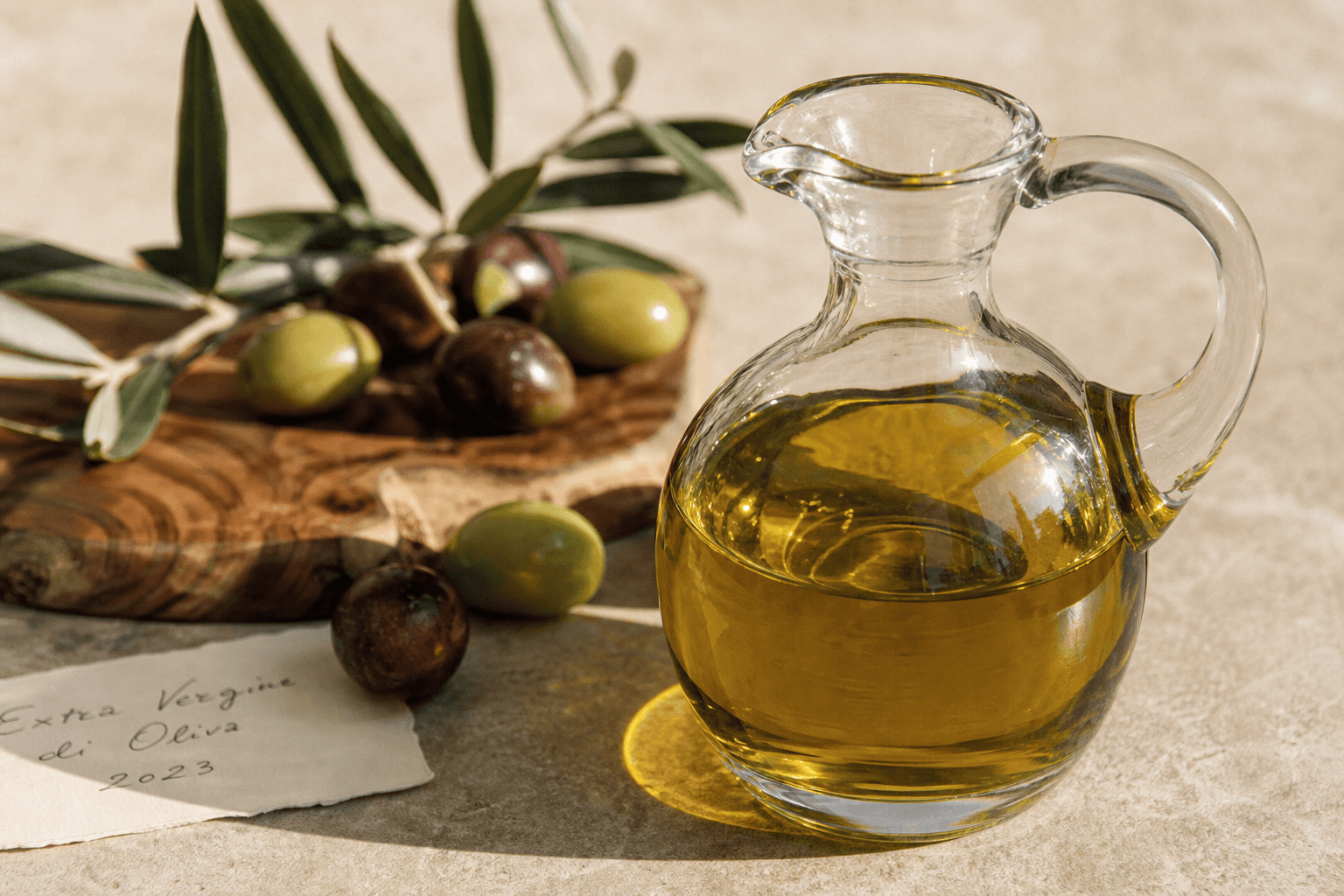
Førstepresset, koldpresset ekstra jomfruolie fra Nabali Baladi-lundene over Nablus, med sporbarhed fra træ til beholder. Den er nævnt som et velsignet træ i åbenbaring og beretning og præsenteres først og fremmest som mad. Traditionelle forbindelser angives med tydelige grænser og uden påstande om kur.
Historisk brug
Oliventræet er nævnt i Koranen som et velsignet træ, shajarah mubārakah, og dets olie har længe tjent som mad og til daglig brug i muslimske samfund.
Profetiske beretninger placerer olivenolie i både kostmæssige og udvortes sammenhænge. Traditionen bevarer begge dele uden at forveksle næring med formel behandling.
Kilder fra Levanten og Andalusien dokumenterer olivenolie i hjemmet og i institutioner. Dette parti stammer fra presning på gården i Nablus i en enkelt sporbar kæde.
Traditionel videnskab
Ibn al-Qayyim drøfter olivenolie blandt de olier, der yder almen støtte, med kosten som det primære og den medicinske forbindelse som det sekundære.
Koranfortolkerne beskriver barakah som velsignelse og opfatter den ikke som et garanteret medicinsk udfald for den enkelte.
Klassiske farmakopéer skelner mellem presningsgrader; denne monografi begrænser udleveringen til første pres.
Traditionel anvendelse
- Traditionelt taget i lille mængde, brugt i madlavning og påført udvortes med mådehold.
- Traditionen optegner både næring og salvning; denne olie anbefales primært som mad.
- Ved udvortes brug bør du undgå sprukken eller betændt hud, medmindre en kvalificeret behandler har rådet dig til det.
Hvert middel dokumenteres til kilde. Vi angiver hvad vi ved, navngiver hvad vi ikke ved, og udleverer midler med klare grænser
Oprindelse, dyrkning og høst
Oprindelse
- Lunde på gården i bjergene over Nablus i Palæstina, sorten Nabali Baladi.
Dyrkning
- Terrasserede lunde uden kunstvanding, hvor regnen styrer dyrkningen, med tørkeprotokol noteret på gårdsniveau.
- Ingen pesticider inden for seks måneder før høst for de udleverede partier.
Høst
- Håndplukket ved grøn-gylden modenhed til denne presning.
- Presset inden for få timer efter høsten, kun første pres, med en syregrad ved frigivelsen under 0,3 %.
- Bevidst ufiltreret; en let bundfald er naturligt.
Kvalitetssikring
- Mørkt glas bruges fra presning til udlevering for at begrænse lyspåvirkning.
- Høståret er angivet på etiketten, og lagerrotation er påbudt.
- Partier, der ikke opfylder institutionens grænser, frigives ikke.
Opbevaring
- Opbevares væk fra lys og varme i et køligt spisekammer.
- Brug inden for atten måneder efter presning; se høståret på etiketten.
- Luk låget fast efter hver brug.
- Uklarhed ved lav temperatur forsvinder ved blid opvarmning.
Forberedelse
- Brug rå for at få hele karakteren frem, for eksempel på brød, i salater og på færdige retter.
- Kan varmes forsigtigt; undgå at nå rygepunktet under tilberedning.
Foreslået brug
Tilbudt som et traditionelt diætetisk middel og ikke som behandling af en diagnosticeret medicinsk tilstand
- Brug som mad, hvor rå brug foretrækkes for denne kvalitet.
- En lille ske til morgenmad optræder i folkelig praksis; tilpas efter kost og faglig rådgivning.
- Udvortes brug af fødevarekvalitet kan ske i beskeden mængde med plastertest.
Kontraindikationer
- Helbredelse er fra Allah; dette middel er en vej.
- Det præsenteres først og fremmest som mad og ikke som en klinisk behandling.
- Det er kalorierigt, så mådehold er en del af ansvarlig brug.
- Det er ikke en erstatning for lægelig behandling.