
Institutionel opsummering
Koldpresset Nigella sativa-olie fra en sporbar høst i højlandet. Profetiske referencer graderes og fortolkes inden for udtrykkelige grænser, før midlet udleveres. Laboratorieverifikation og kontrolleret emballage bruges til at bevare materialets kvalitet.
Historisk brug
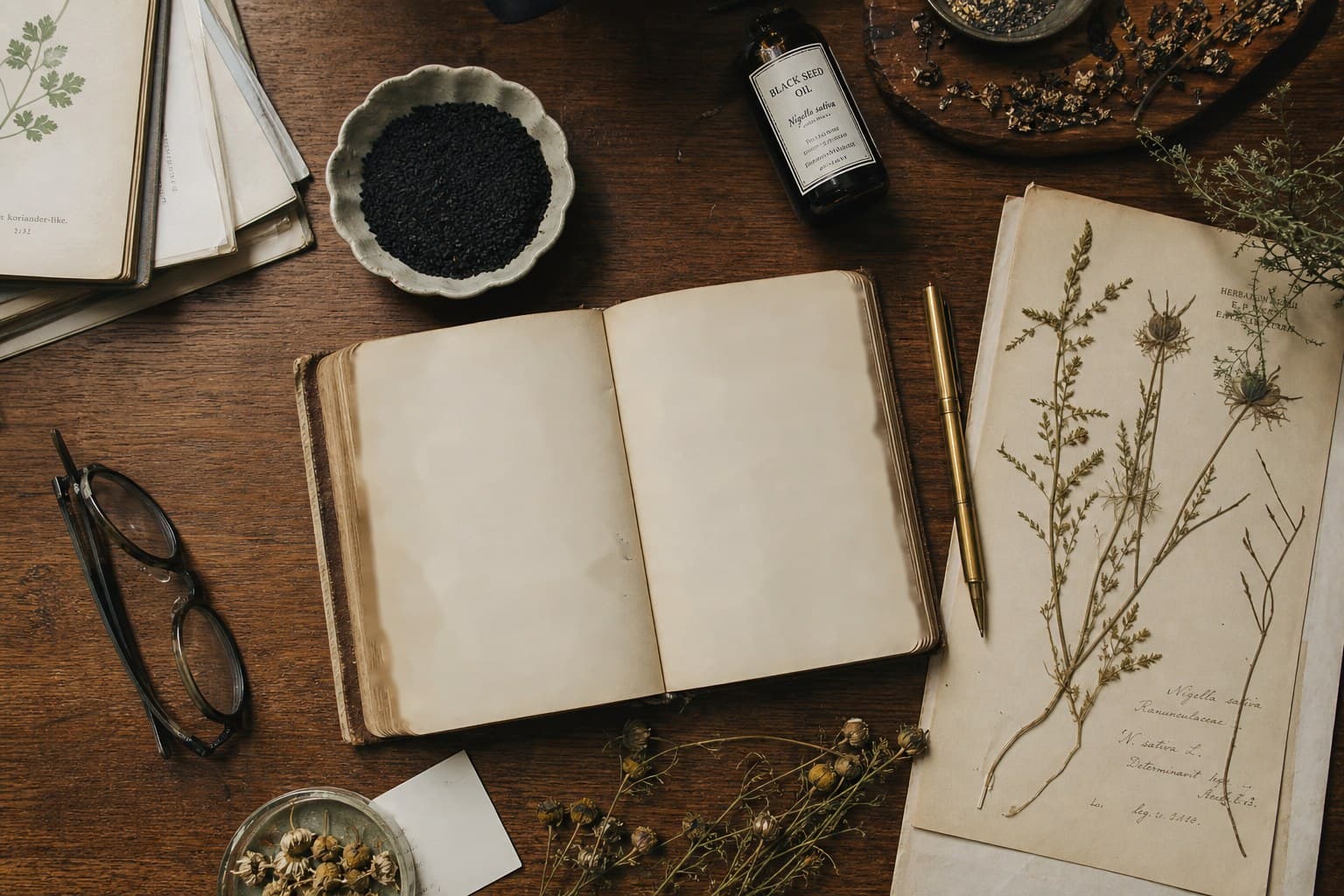
Sort frø, ḥabbah sawdāʾ, har en fremtrædende plads i Tibb al-Nabawī. Ibn al-Qayyim behandler det udførligt og optegner vedvarende brug i den islamiske medicinske litteratur.
Nigella var også kendt i ældre medicinske traditioner og blev siden indlemmet i de arabiske farmakopéer under navne, der senere blev knyttet til den profetiske terminologi.
Det optræder både i enkle og sammensatte præparater i historisk praksis. Denne udlevering bevarer den enkle form, så oprindelse og identitet forbliver klare.
Traditionel videnskab
Ibn al-Qayyim optegner brug som hele frø, knuste frø og olie, ofte sammen med honning. Han advarer også mod overdrivelser ud over det overleverede belæg.
Senere forfattere regner sort frø blandt de olier, der yder almen støtte, og fastholder samtidig grænser og klinisk skøn.
Kommentatorer identificerer ḥabbah sawdāʾ som Nigella sativa og ikke som spidskommen; mærkningen følger denne identifikation.
Traditionel anvendelse
- Traditionelt brugt som hele frø, knuste frø eller presset olie, også sammen med honning.
- Klassiske tekster forbinder det med almen støtte og velvære i flere systemer; det er forbindelser, ikke kliniske påstande.
- Udvortes brug nævnes i nogle beretninger; dette præparat tilbydes primært til indtagelse som kosttilskud.
Hvert middel dokumenteres til kilde. Vi angiver hvad vi ved, navngiver hvad vi ikke ved, og udleverer midler med klare grænser
Oprindelse, dyrkning og høst
Oprindelse
- Frø fra små gårde i Harar-højlandet i Etiopien, med sporbare høstjournaler.
Dyrkning
- Nigella sativa dyrkes på åben mark i højden, med adskillelse, der beskytter den botaniske identitet.
- Frøene renses og tørres på gården før presning.
Høst
- Koldpresset ved kilden inden for otteogfyrre timer efter rensning.
- Ingen opløsningsmiddelekstraktion og ingen raffinering ud over naturlig henstand.
- Partijournaler forbinder høstdato, presningsdato og botanisk identifikation.
Kvalitetssikring
- Udleveres i mørkt glas, med kvælstofbeskyttelse, hvor partiets forhold tillader det.
- Iltning overvåges, og bedst-før-datoen fastsættes ud fra presningsdatoen.
- Etiketterne angiver botanisk identitet, oprindelse, partisporbarhed, opbevaring og grænser.
Opbevaring
- Opbevares køligt og mørkt, helst under 18 °C efter åbning.
- Hold flasken oprejst og tæt lukket for at begrænse luft- og lyspåvirkning.
- Brug inden for seks måneder efter åbning, og inden den angivne bedst-før-dato, hvis flasken er uåbnet.
- Stop brugen, hvis der opstår udpræget harsk lugt.
Forberedelse
- Traditionelt indtaget i lille mængde, direkte eller sammen med mad.
- Kan blandes med honning ved stuetemperatur; undgå langvarig høj varme.
- Vejledning i tilberedning følger med hver udlevering.
Foreslået brug
Tilbudt som et traditionelt diætetisk middel og ikke som behandling af en diagnosticeret medicinsk tilstand
- Brug som spiseolie i moderat mængde, alene eller sammen med mad, traditionelt med honning.
- Begynd med en mindre mængde, hvis olien er ukendt for dig.
- Udvortes brug bør følge en behandlers vejledning, med plastertest på følsom hud.
Kontraindikationer
- Helbredelse er fra Allah; dette middel er en vej, og der gøres ikke krav om kur for nævnte sygdomme.
- Frarådes under graviditet og amning uden kvalificeret vejledning.
- Kan virke sammen med blodfortyndende medicin; oplys din læge om brugen.
- Vedvarende symptomer kræver lægelig konsultation; dette er ikke en erstatning for en læge.